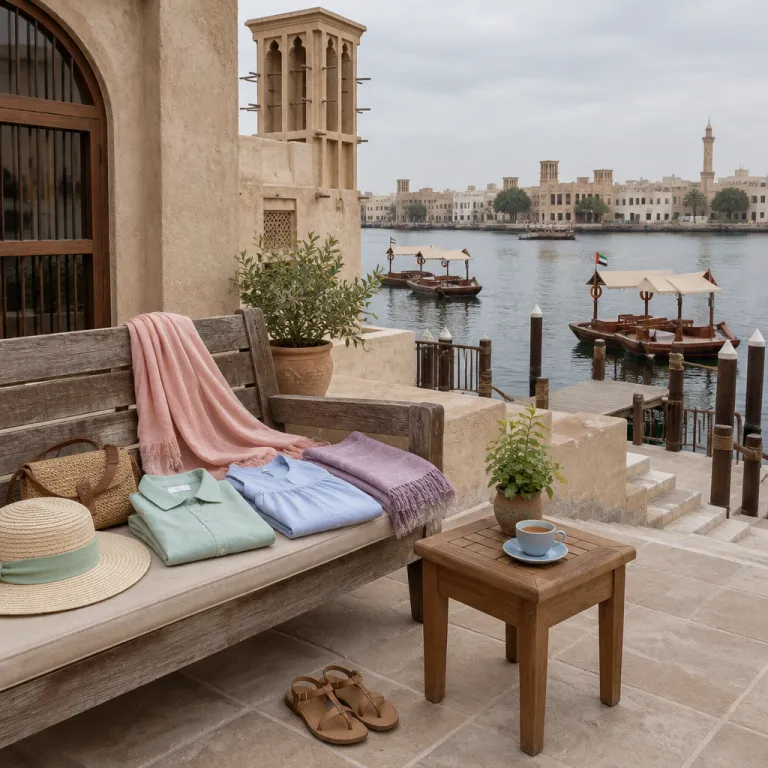
Understanding what to wear in Dubai as a tourist around Old Dubai
Old Dubai feels very different from the marina skyline, so what you wear should respect its quieter rhythm and traditional character. When you walk through Al Fahidi Historical Neighbourhood, Al Seef, or along Dubai Creek, the local dress code in these public places leans modest, and that will shape every shirt, dress, and pair of shoes you pack. Think of your clothing as part cultural respect, part heat management, and part comfort for long days on your feet in a hot, often humid climate.
For women, light dresses that are at least knee length work beautifully in Old Dubai, especially when they cover shoulders and avoid deep necklines that might feel out of place in historic souks. Men are most comfortable in breathable shirts with short or long sleeves and lightweight trousers rather than gym shorts, because the overall Dubai dress expectations in heritage districts are more conservative than at a beach club or resort pool. When you plan what to wear in Dubai as a tourist, imagine moving from an air conditioned creekside heritage stay to a bustling abra ride, and choose layers that you can add or remove without ever feeling underdressed or overly exposed.
Many Dubai women pair a long abaya with contemporary shoes and a stylish top, and that mix of modesty and fashion is a helpful guide for visitors. You do not need to dress Dubai style in a traditional way, but you will feel more at ease if your clothing covers shoulders and knees when you explore mosques, museums, and older markets. When you choose Dubai appropriate outfits in these areas, you signal respect for local culture while still staying cool in the desert climate, especially during the hotter months when temperatures can exceed 40 °C (104 °F) according to the UAE National Center of Meteorology, which publishes climate normals and seasonal summaries.
Creekside heritage stays and how they shape your dress choices
Choosing a hotel along Dubai Creek or in Al Seef changes what you wear from morning to night, because you are surrounded by both tourists and long term residents. Many restored courtyard houses and heritage stays sit steps from mosques and family homes, so both men and women should lean modest in shared corridors, breakfast patios, and other semi public places. When you step out from your room to the rooftop terrace at sunrise, a loose shirt with long linen pants or a knee length dress with a light scarf will feel appropriate, comfortable, and in tune with the neighbourhood.
From these creekside hotels, you will probably walk to the Dubai Museum in Al Fahidi Fort, the textile souk, and the abra stations that connect you to Deira, so your clothing needs to transition smoothly between hotel lounges and traditional streets. Pack shirts and tops that cover shoulders, and do not forget to bring a thin shawl that you can use to cover your upper arms when you cross more conservative parts of Old Dubai or step into a small mosque courtyard. If you plan to visit the Dubai Frame from Old Dubai, check timings and ticket details in advance, then choose outfits that work for both air conditioned galleries and the warmer walk to and from the attraction, using a similar modest dress code to what you wear in the creekside neighbourhoods.
Many guests underestimate how much time they will spend walking along the water, so prioritize shoes with cushioned soles rather than delicate flip flops that suit only the beach. A smart casual Dubai dress approach works best in these heritage hotels, where you might enjoy Arabic coffee in a shaded courtyard before heading out to visit Dubai Creek by boat. When you return in the evening, you will appreciate breathable clothing that still covers shoulders and knees, because some properties host cultural talks or performances where modest attire feels more aligned with the setting and with the families who live nearby.
Respectful outfits for souks, mosques, and other public places
Old Dubai’s gold and spice souks are some of the busiest public places in the city, and what you wear there affects how comfortable you feel and how much attention you attract. For women, knee length dresses or loose pants with a light top that covers shoulders and upper arms strike the right balance between modesty and ease. Men are well dressed in cotton shirts with either long trousers or tailored shorts that reach the knee, avoiding gym style shorts that look too casual for these traditional trading streets and crowded alleys.
When you enter a mosque, the dress code becomes more specific, and both men and women will need to cover shoulders and knees completely, with women also covering hair using a scarf. At Jumeirah Mosque, for example, the Sheikh Mohammed bin Rashid Al Maktoum Centre for Cultural Understanding asks visitors to wear modest clothing and provides abayas or long garments at the entrance for those who need them, and its visitor information explains that respectful attire is part of the learning experience. Planning your Dubai wear in advance means you can arrive already dressed appropriately, which feels more respectful and saves time. A long shirt over loose pants or a maxi dress Dubai style with a scarf in your bag will serve you well if you decide spontaneously to join a guided visit.
In souks, you will notice that most Dubai women and many visitors choose clothing that is loose rather than tight, which helps with airflow in the heat and makes browsing more relaxed. Avoid very short shorts, strapless tops, and low cut dresses, because these draw unnecessary attention and clash with the local dress code norms in these parts of Dubai and Abu Dhabi. When you think about what clothing choices to pack, imagine whether you would feel comfortable stepping into a family owned shop or greeting an elder, and let that guide your final selection for these traditional public spaces.
From creek to coastline: what to wear between Old Dubai and the beach
Many travellers split their stay between a creekside hotel in Old Dubai and a resort near the beach, which means your suitcase must handle both modest streets and relaxed shorelines without becoming overloaded. At the beach itself, swimwear is accepted, but you should still walk through hotel lobbies and other public places in a cover up, knee length shorts, or a casual dress rather than just a bikini. When you move between pool, restaurant, and room, think of Dubai dress expectations as similar to a refined Mediterranean resort rather than a party island, with families and multi generational groups sharing the same spaces.
For men, tailored swim shorts with a shirt or top when you leave the sand work well, while women often choose one piece swimsuits or bikinis with a kaftan or long shirt layered on top. Flip flops are fine for the pool deck and beach, but you will want more supportive shoes for exploring things Dubai is famous for, such as creekside walks, malls, and cultural districts like Al Shindagha. If you are choosing a hotel based on shoreline access, this detailed guide to the best beaches in Dubai and how the shoreline shapes your hotel choice will help you match your clothing to the atmosphere of each coastal area, from family friendly stretches to livelier waterfronts with beach clubs and music.
Remember that what to wear in Dubai as a tourist changes again when you leave the resort for dinner in Old Dubai or a visit Dubai evening cruise on the creek. Pack at least one smart casual outfit where men wear long pants with a collared shirt, and women choose dresses or coordinated separates that cover shoulders and knees without feeling heavy. This way, your Dubai wear can move gracefully from a sunlit beach afternoon to an atmospheric dhow dinner without a complete outfit change, simply by swapping shoes or adding a light scarf.
Desert safari evenings, Dubai winter stays, and practical packing
A desert safari from Old Dubai is often a highlight of any visit, and what you wear there needs special thought because conditions change quickly. During the day, temperatures soar, so light shirts, breathable pants, and knee length shorts for men are practical, while women are usually most comfortable in loose dresses or trousers that cover shoulders and knees to protect skin from sun and sand. Closed shoes are essential for dune bashing and camel rides, because flip flops fill with sand and offer little support on uneven ground or when climbing dunes.
As the sun sets, the desert cools quickly, especially during Dubai winter, so pack a long sleeve top or light jacket that you can layer over your shirt or dress. Men often rely on cotton or linen layers, and women appreciate maxi dresses with a cardigan, which align with the informal dress code at most desert safari camps while still keeping you warm. When you plan which clothing items to bring, do not forget a scarf or pashmina, which can double as sun protection by day and a shoulder cover by night when temperatures drop.
For travellers staying in Old Dubai during Dubai winter, evenings along the creek can feel breezy, so slightly heavier fabrics work better than ultra thin summer clothing. Many Dubai women switch to long trousers and closed shoes at this time, and visitors will feel comfortable doing the same, especially when dining outdoors or taking an abra after dark. A compact packing list where Dubai wear includes versatile shirts, dresses, and pants that layer easily will serve you better than a suitcase full of single purpose outfits, and will keep you prepared for both desert excursions and cool evenings by the water.
Hotel etiquette, smart casual evenings, and what to wear in Dubai as a tourist
When you book a hotel in Old Dubai or along the creek, you will notice that lobby and restaurant spaces often follow a smart casual dress code that balances comfort with decorum. Men usually wear collared shirts or neat tops with long pants or tailored knee length shorts, while women choose dresses, skirts, or trousers that cover shoulders and avoid overly revealing cuts. Swimwear, gym clothing, and very short shorts belong in the pool or fitness areas only, not in lounges, breakfast rooms, or business style lobbies.
For higher end restaurants or rooftop venues, especially those with views across Dubai Creek to the skyline, the Dubai dress expectations rise another step. Men are expected to wear long trousers with a shirt and closed shoes, and women typically choose elegant dresses or coordinated outfits that are at least knee length, often pairing them with heeled shoes or refined sandals. When you plan what to wear in Dubai as a tourist who enjoys dining out, pack at least one polished outfit that would feel appropriate in a European city restaurant, then adapt it with lighter fabrics for the climate and a shawl for air conditioned interiors.
Old Dubai hotels also sit close to religious and residential areas, so even when you step outside briefly, it is courteous to keep shoulders and knees covered. Many Dubai women and men wear modest clothing as a matter of daily routine, and aligning your outfits with that norm will make interactions smoother and more respectful. If you remember only one rule, let it be this simple guide for shared spaces: cover shoulders and knees, choose breathable fabrics, and you will feel at ease almost everywhere in the city, from hotel corridors to creekside promenades.
Key figures about dress expectations and tourism in Dubai
- Dubai welcomed 16.73 million international overnight visitors in 2019, the last full pre pandemic year, and a significant share of them stayed in or passed through Old Dubai, which makes understanding local dress expectations essential for a smooth stay (source: Dubai Department of Economy and Tourism, Tourism Performance Report 2019, which tracks arrivals and hotel occupancy).
- Average daytime temperatures in Dubai range from around 20–24 °C during the coolest months to more than 40 °C in peak summer, so lightweight, breathable clothing that still covers shoulders and knees is the most practical choice for most tourists (source: UAE National Center of Meteorology, climate normals updated 2023, including monthly averages and extremes).
- Surveys of visitor satisfaction conducted by Dubai’s tourism authorities in the early 2020s show higher ratings from travellers who report feeling comfortable navigating cultural norms, including dress code guidelines in public places such as malls, souks, and heritage districts (source: Dubai Department of Economy and Tourism, visitor insights summaries 2022–2023, which analyse feedback from international guests).
- Desert safari excursions remain among the top booked activities from hotels in Old Dubai, and operators routinely advise guests to wear closed shoes and long pants for safety and comfort during dune bashing and evening camp activities, especially in winter months when desert temperatures drop after sunset.
FAQ about what to wear in Dubai as a tourist
Can tourists wear shorts in Old Dubai and at the creek
Tourists can wear shorts in Old Dubai, but they should be at least knee length, especially in souks, malls, and family oriented public places. Very short shorts or gym style designs are better kept for private hotel pools or beaches. Men and women will feel more comfortable in longer shorts or lightweight trousers when walking through traditional neighbourhoods and crossing between Old Dubai and newer districts.
Do women need to cover their hair in Dubai
Women do not need to cover their hair in most parts of Dubai, including hotels, malls, and streets in Old Dubai. Hair covering is required only inside mosques and some religious sites, where scarves are often provided if needed and where modest clothing is expected. Many visitors still carry a light scarf to cover shoulders or hair when they feel it is appropriate, or when they join a cultural tour that includes a mosque visit.
What should I wear for a desert safari from Old Dubai
For a desert safari, wear breathable shirts or tops with long pants or knee length shorts, and choose closed shoes rather than flip flops. Women are usually most comfortable in loose trousers or maxi dresses that protect skin from sun and sand, while men often prefer cotton or linen clothing that allows easy movement. Bring a light jacket or shawl for cooler desert evenings, especially during Dubai winter, when temperatures can drop noticeably after sunset.
Is swimwear acceptable at Dubai hotel pools and beaches
Swimwear is acceptable at hotel pools and private beaches, where standard one piece swimsuits and bikinis for women and swim shorts for men are common. When you leave the pool or beach area, you should put on a cover up, dress, or shirt and shorts before entering indoor public places or walking through lobbies. Walking through restaurants or elevators in only swimwear is considered inappropriate and may draw comments from staff.
How should I dress for dinners in Old Dubai hotels
For dinners in Old Dubai hotels, aim for smart casual clothing that would suit a refined city restaurant. Men usually wear long trousers or tailored shorts with a collared shirt and closed shoes, while women choose dresses, skirts, or trousers that are at least knee length and cover shoulders. Very casual items such as gym wear, beach flip flops, and overly revealing outfits are best avoided in these settings, especially in venues that overlook Dubai Creek or host live music.