Understanding the real cost of living in Dubai before you book
Anyone planning a hotel stay in Dubai should first understand how the wider cost of living in the city influences prices. When you grasp the real cost of living in Dubai this year, you can judge whether a nightly rate, a serviced apartment offer, or an extended stay package truly represents value. This broader view of living expenses in the UAE helps you compare Dubai with other expensive cities and decide how long you want to live in or simply visit the city.
Dubai is one of the most internationally connected cities in the UAE, and its position between Hong Kong and Europe shapes both hotel pricing and long-stay housing costs. Global benchmarks such as the Mercer Cost of Living Survey 2024 place Dubai in the top 30–40 most expensive cities for international assignees, although it usually sits below Hong Kong and below the combined cost levels seen in Hong Kong and Singapore. When you evaluate the cost of living in Dubai in 2024, you are really weighing a high quality of life against substantial monthly expenses for housing, food, transport, and leisure.
For a single person staying in a hotel or a serviced apartment city property, the average monthly cost will depend heavily on location and season. A guest based near the city centre will pay a premium in AED per night, mirroring the higher rent for a one bedroom apartment in the same area. If you plan to move to Dubai for several months, it becomes essential to compare the monthly cost of a long-stay hotel room with the average cost of renting an apartment and covering separate utilities and other living expenses.
Housing, apartments and branded residences versus traditional hotels
Accommodation is the single largest component of the cost of living in Dubai, and it directly shapes hotel pricing. In prime districts close to the city centre, the housing costs for a modern one bedroom apartment can easily reach 7,000–12,000 AED per month in areas such as Downtown Dubai or Dubai Marina, which pushes up the rates that nearby hotels and branded residences must charge. When you see a high nightly rate, you are often looking at a reflection of the underlying real estate market rather than pure hotel margin.
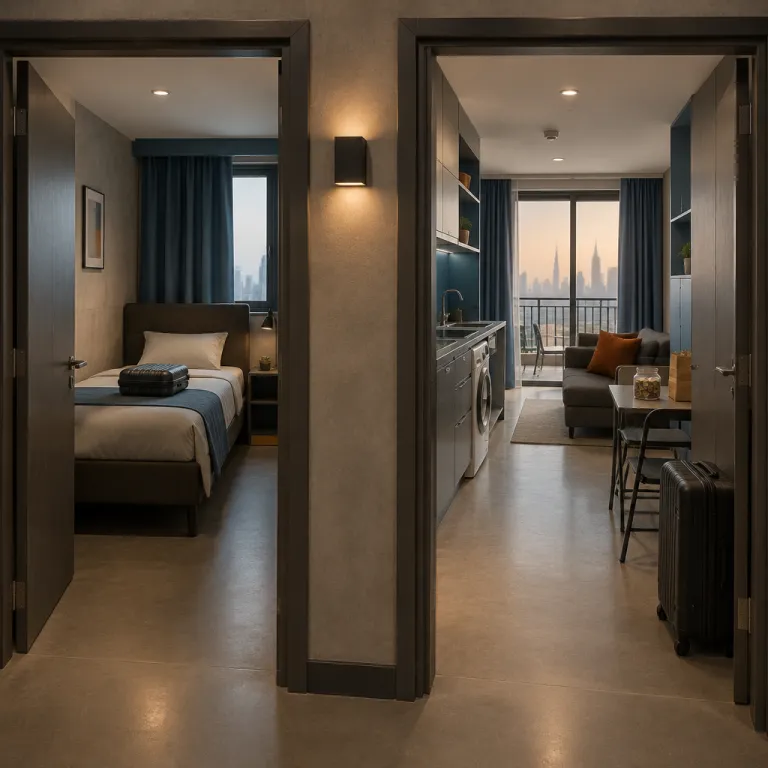
Many global chains now operate branded residences in Dubai, offering serviced apartment style units that blur the line between housing and hospitality. These residences typically provide a full kitchen, laundry facilities, and access to hotel amenities, which can reduce other monthly expenses and improve your perceived quality of life. For guests who plan to live in Dubai for more than one month, the total monthly cost of a branded residence can compare favourably with both a standard hotel room and a rented apartment in the same apartment city district.
Families and international assignees often find that a larger bedroom apartment or multi bedroom apartment in a branded residence offers better value than booking two adjoining hotel rooms. The average cost per square metre is usually lower, and the ability to cook at home can cut food costs significantly over a full month. When you calculate the cost of living in Dubai in 2024, you should always compare the AED per month rate of these residences with the going rents in the wider housing market and with the total costs of a conventional hotel stay.
City centre versus suburban districts and their impact on your stay
Where you choose to stay in Dubai has as much impact on your budget as the category of property you select. A hotel or serviced apartment in the city centre, close to Dubai Mall or Dubai International Financial Centre, will command higher rates but reduce your transport expenses and commuting time. By contrast, staying in emerging districts further from the centre can lower your monthly cost in AED while adding taxi or metro fares to your overall living expenses.
For travellers considering a move to Dubai, this trade off between location and cost mirrors the decision residents make when choosing long term housing. Many international assignees accept higher housing costs in central areas because their salary packages include housing allowances that are calibrated to the Mercer cost of living index. Others prefer to live in more suburban communities, where the average monthly rent for a bedroom apartment is lower, and then commute into the city for work or leisure, balancing quality of life with financial prudence.
Hotel guests face a similar calculation, especially for stays of one month or longer where the cost of living in Dubai becomes very tangible. A central hotel may reduce the need for car hire and make it easier to live without a vehicle, which can offset higher room costs. Meanwhile, a property outside the city centre might offer larger apartments and lower AED per month rates, but you should factor in the extra costs of moving around the city each day.
From short stays to extended stays: when hotels meet everyday living
Dubai has become a hub for extended stays, and this trend is reshaping how hotels price and package their rooms. Many properties now market long stay offers that resemble residential leases, quoting rates in AED per month rather than per night and including utilities, housekeeping, and sometimes co working access. For guests who intend to live in Dubai for several months without committing to a full housing contract, these offers can simplify budgeting and clarify the real cost of living.
When you compare extended stay hotels with renting an apartment, you should look beyond the headline monthly cost and consider all the smaller expenses that accumulate over a year. A rented apartment in a residential tower may have a lower average cost on paper, but you will need to add internet, cooling, maintenance, and sometimes parking to your monthly expenses. An extended stay hotel or branded residence often bundles these costs into a single AED per month figure, which can be easier to manage for a single person or for international assignees on fixed allowances.
Travellers who plan to move to Dubai temporarily for project work often choose extended stay hotels near the business centre to minimise commuting time. One British consultant interviewed in early 2024 described how a three month stay in a serviced residence near Dubai International Financial Centre cost slightly more than a suburban lease but saved over an hour of commuting each day. When you evaluate the cost of living in Dubai over several months, consider how much you value convenience, services, and flexibility compared with the potential savings of a more traditional apartment lease.
Comparing Dubai with Abu Dhabi, Hong Kong and Singapore for hotel guests
Many travellers weighing a stay in Dubai also compare it with Abu Dhabi, Hong Kong, or Singapore, especially when planning multi city business trips. On most global rankings of expensive cities, Hong Kong and Singapore sit at the very top, with Dubai and Abu Dhabi somewhat lower but still firmly in the high cost bracket. This means that while the cost of living in Dubai is significant, the average monthly cost for accommodation and daily living can still undercut the most expensive cities in Asia.
For hotel guests, this relative positioning matters because corporate travel policies and salary packages are often benchmarked against the Mercer cost of living index. International assignees who move to Dubai from Hong Kong may find that their housing allowance stretches further, allowing them to live in a larger bedroom apartment or to upgrade from a standard hotel room to a serviced residence. By contrast, someone relocating from Abu Dhabi to Dubai might experience slightly higher housing costs and a busier city lifestyle, especially near the main business centre and waterfront districts.
When you analyse the cost of living in Dubai in 2024, it helps to translate nightly hotel rates into an equivalent AED per month figure and then compare that with the average cost of renting. This exercise reveals that Dubai often offers better space and amenities than Hong Kong for the same budget, particularly in apartment city style developments. However, the overall monthly expenses for food, transport, and leisure can still be substantial, so you should plan your stay with the same care you would apply when deciding to live in any of the world’s expensive cities.
Beyond the room rate: schools, salaries and the wider lifestyle equation
For guests who are scouting hotels while considering a permanent move to Dubai, the cost of living extends far beyond the room rate. Families evaluating a relocation package must factor in school fees at international schools, which can rival those in Hong Kong or Singapore and significantly influence the overall monthly cost of living. These education expenses, combined with housing costs and everyday expenses, shape whether a proposed salary in AED truly supports the desired quality of life.
Corporate travellers and international assignees often use their first extended hotel stay to test how it feels to live in Dubai day to day. During this period, it is wise to track all expenses carefully, from meals and transport to leisure and healthcare, building your own data set on the real cost of living in the city. Comparing this personal data with published averages for a single person or for families helps you judge whether the salary on offer will comfortably cover both immediate costs and longer term commitments such as school fees.
For many professionals, the decision to move to Dubai hinges on whether the combination of tax free salary, modern infrastructure, and lifestyle amenities outweighs the high cost of living. If the numbers work, you can enjoy a strong quality of life, with hotels, serviced apartments, and branded residences providing flexible options as your needs evolve over the year. If they do not, it may be wiser to treat Dubai as a short term destination rather than a place to live full time, using hotels as a base while you explore other cities in the UAE and beyond.
Key figures that shape the cost of living and staying in Dubai
- Global consulting firms such as Mercer regularly rank Dubai among the top 30 to 40 most expensive cities worldwide for international assignees, while Hong Kong and Singapore usually occupy the very highest positions on the same cost of living index. The Mercer Cost of Living Survey 2024 confirms this relative positioning and is widely used by employers when setting housing allowances.
- Market reports from major real estate agencies show that central Dubai rents for a modern one bedroom apartment can be several thousand AED per month, with Downtown Dubai and Dubai Marina often in the 7,000–12,000 AED range and prime city centre districts commanding the highest housing costs and directly influencing nearby hotel rates. Recent 2024 overviews from Knight Frank and JLL highlight how limited supply in popular districts has kept these rents elevated.
- Travel and relocation surveys indicate that accommodation typically accounts for 30 to 40 percent of the total monthly cost of living in Dubai for a single person, with the remainder split between food, transport, utilities, leisure, and school fees for those with children. Numbeo’s 2024 Dubai cost of living pages, based on user submitted data, broadly support this distribution of expenses.
- Comparative cost of living data suggests that while Dubai is one of the more expensive cities in the UAE, it often remains slightly less costly overall than Hong Kong for similar housing standards, especially when measured in terms of space per bedroom apartment. For example, Numbeo’s 2024 figures show that central Dubai rents for a one bedroom apartment are generally lower than in Hong Kong when converted to a common currency.
| Accommodation type (2024) | Typical monthly range (AED) | Notes on what is included |
|---|---|---|
| Central one bedroom apartment (Downtown Dubai, Dubai Marina) | 7,000–12,000 | Unfurnished or semi furnished; excludes utilities, internet, and parking |
| Suburban one bedroom apartment (Jumeirah Village, Dubai Silicon Oasis) | 4,500–7,000 | Residential tower; separate monthly bills for cooling, electricity, and internet |
| Long stay hotel or branded residence studio | 6,500–10,000 | Usually includes utilities, housekeeping, basic internet, and access to facilities |
| Long stay hotel one bedroom apartment near business centre | 8,000–14,000 | Serviced apartment style; often bundles gym access, pool, and limited co working |
FAQ about the cost of living in Dubai and hotel choices
How does the cost of living in Dubai affect hotel prices ?
Hotel prices in Dubai closely track the wider cost of living, especially housing costs and real estate values in each district. When rents for apartments rise in the city centre, nearby hotels and branded residences usually adjust their nightly and monthly rates in AED. This is why understanding the broader cost of living in Dubai in 2024 helps you judge whether a particular hotel offer is genuinely competitive.
Is it cheaper to book a long stay hotel or rent an apartment ?
For stays of one to three months, long stay hotels and serviced residences can be cost competitive with renting an apartment, because they bundle utilities, internet, and services into a single AED per month rate. Over a full year, a standard rental apartment often has a lower average cost, but you must add separate monthly expenses for bills and maintenance. The best option depends on how long you plan to live in Dubai and how much you value flexibility and included services.
Which areas of Dubai offer the best balance between cost and convenience ?
Districts just outside the main city centre often provide a better balance between housing costs and access to business and leisure hubs. You may find that hotels and serviced apartments in these areas offer lower monthly cost levels while still keeping commute times reasonable. Central locations remain more expensive, but they can reduce transport expenses and improve day to day quality of life.
How does Dubai compare with Abu Dhabi, Hong Kong and Singapore for travellers ?
Dubai and Abu Dhabi are both high cost cities within the UAE, but Dubai typically has a broader range of hotel and serviced apartment options across different price points. Compared with Hong Kong and Singapore, Dubai often offers more space for the same budget, especially in bedroom apartment style accommodation. However, the overall cost of living, including food and leisure, still requires careful budgeting for both short stays and longer assignments.
What should I budget as a single person staying in Dubai for a month ?
A single person should start by pricing accommodation, which will be the largest part of the monthly cost, and then add realistic estimates for food, transport, and leisure based on personal habits. As a simple example, a long stay guest paying 8,000 AED for a serviced apartment might add 1,800–2,500 AED for groceries and occasional dining out, 500–800 AED for metro and taxis, and 700–1,200 AED for leisure and incidentals, giving a working monthly budget in the 11,000–12,500 AED range. Comparing these figures with published average monthly expenses for living in Dubai will help you decide whether your planned budget and salary are sufficient.
References
Mercer Cost of Living Survey 2024 ; Numbeo Cost of Living in Dubai 2024 pages ; Knight Frank Dubai real estate market review 2024 ; JLL Dubai residential market report 2024.